

The Baroque Compass Returns to Mafra
22 Oct 2026
National Music Museum
The Baroque Compass returns to Mafra for its recording launch, accompanied by the long-term loan of Giorgio Domenico Duprà’s portrait of King João V to the National Music Museum.
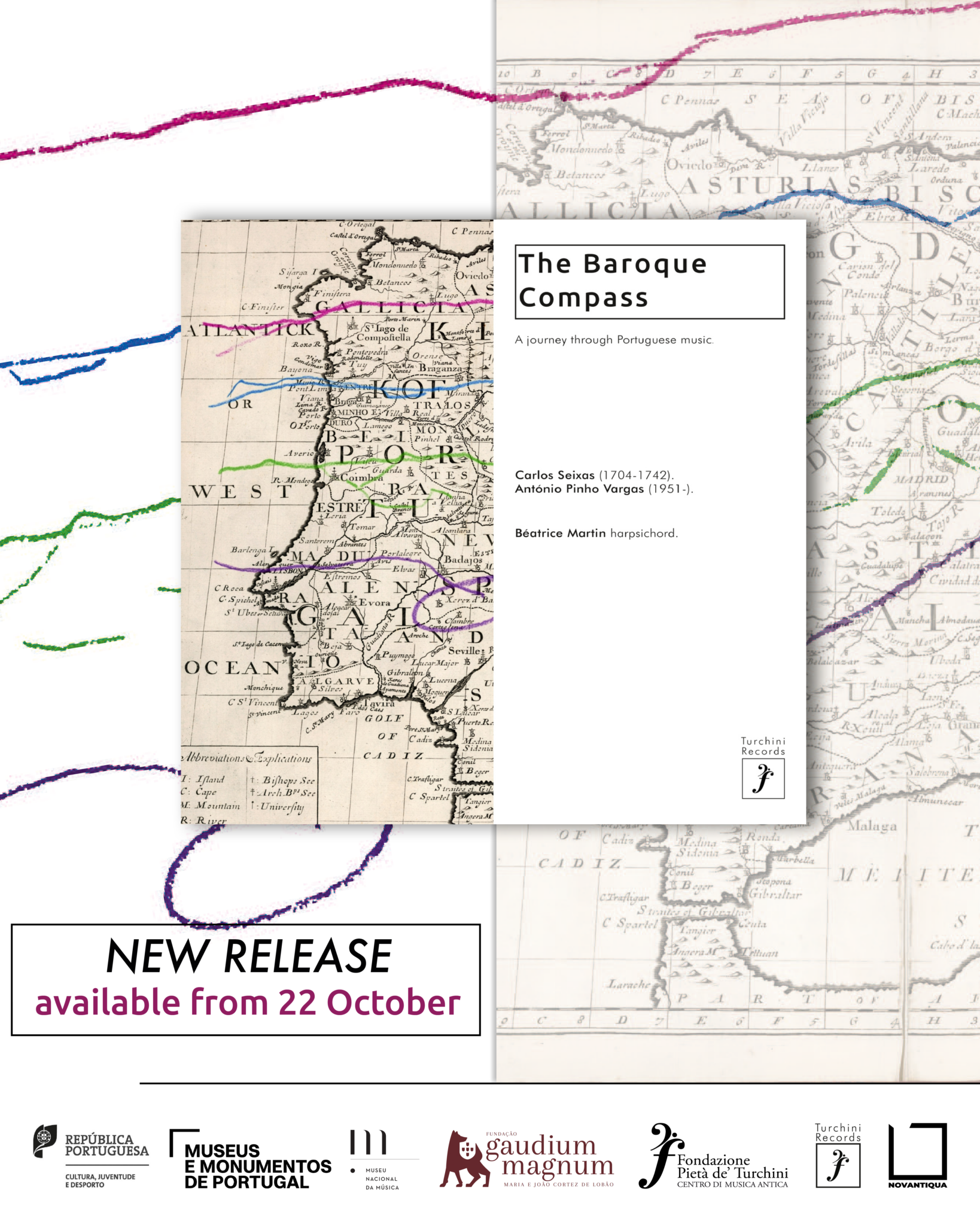
The Baroque Compass returns to Mafra on 22 October to mark an important milestone in a project developed over the past two years through a collaboration between the Gaudium Magnum Foundation – Maria and João Cortez de Lobão, the National Music Museum and the Fondazione Pietà de’ Turchini. The occasion will bring together two significant developments: the launch of the project’s recording on CD, LP and digital platforms, and the presentation of a portrait of King João V by Giorgio Domenico Duprà, placed on long-term loan to the Museum from the Gaudium Magnum Collection.
The date coincides with the anniversary of the birth of King João V, whose reign marked an important period of artistic and musical development in Portugal. Lisbon became an important European cultural centre, attracting musicians and artists from abroad and providing the setting in which Carlos Seixas developed his career. The Royal Palace of Mafra, now home to the National Music Museum, remains one of the most visible expressions of this cultural legacy.
Released by Turchini Records, The Baroque Compass features French harpsichordist Béatrice Martin performing seven sonatas by Carlos Seixas alongside Il Ritorno by contemporary Portuguese composer António Pinho Vargas, establishing a dialogue between eighteenth-century Portuguese music and the present day.
The recording was made at the National Music Museum on the historic Portuguese harpsichord built in Lisbon by Joaquim José Antunes in 1758, today designated a National Treasure. The instrument establishes a direct connection between the repertoire and the musical environment in which it was originally performed.
The portrait of King João V by Giorgio Domenico Duprà, from the Gaudium Magnum Collection, will be presented on the occasion of the launch and will remain on display at the Museum as part of the long-term loan. Its presentation adds a further dimension to the project, bringing together musical and artistic heritage associated with the King’s reign.
The event will take place in the Museum’s auditorium at 4 p.m., with an informal conversation between Edward Ayres de Abreu, Director of the National Music Museum, and Maria Cortez de Lobão, Co-President of the Gaudium Magnum Foundation, exploring the historical and musical context of the project and the Foundation’s loan.
The Baroque Compass has been shaped by close collaboration between the teams of the three partner institutions. Edward Ayres de Abreu played a central role in the project’s development, from the research and definition of the programme to its practical implementation. At the Fondazione Pietà de’ Turchini, Director Maria Federica Castaldo and Giuliana Carbone were closely involved throughout its different stages, including the programme in Naples and the production and coordination of the recording with Turchini Records. At the Gaudium Magnum Foundation, Sofia Mendes contributed to the project’s development and research during its earlier stages.
The recording brought together Béatrice Martin at the harpsichord and Mario Sollazzo, responsible for the recording, while Stefano Zanobini created the album’s visual identity, based on an eighteenth-century map of Portugal and the idea of routes and connections that gives the project its name. The physical edition also includes contributions by musicologist Miguel Jalôto and art historian Giuseppina Raggi.
For the Gaudium Magnum Foundation, The Baroque Compass reflects a wider ambition to contribute to the study, preservation and international visibility of Portuguese cultural heritage, while fostering dialogue and collaboration between institutions in Portugal and abroad.
The Baroque Compass was also documented by Adriana Romero. The film below offers a closer look at the project and the people, music and institutions behind it.
Date Published:


